

PHOTO // Romania, Moldova and Ukraine united by rail: Cantemir–Fălciu section reshapes trade routes in Eastern Europe
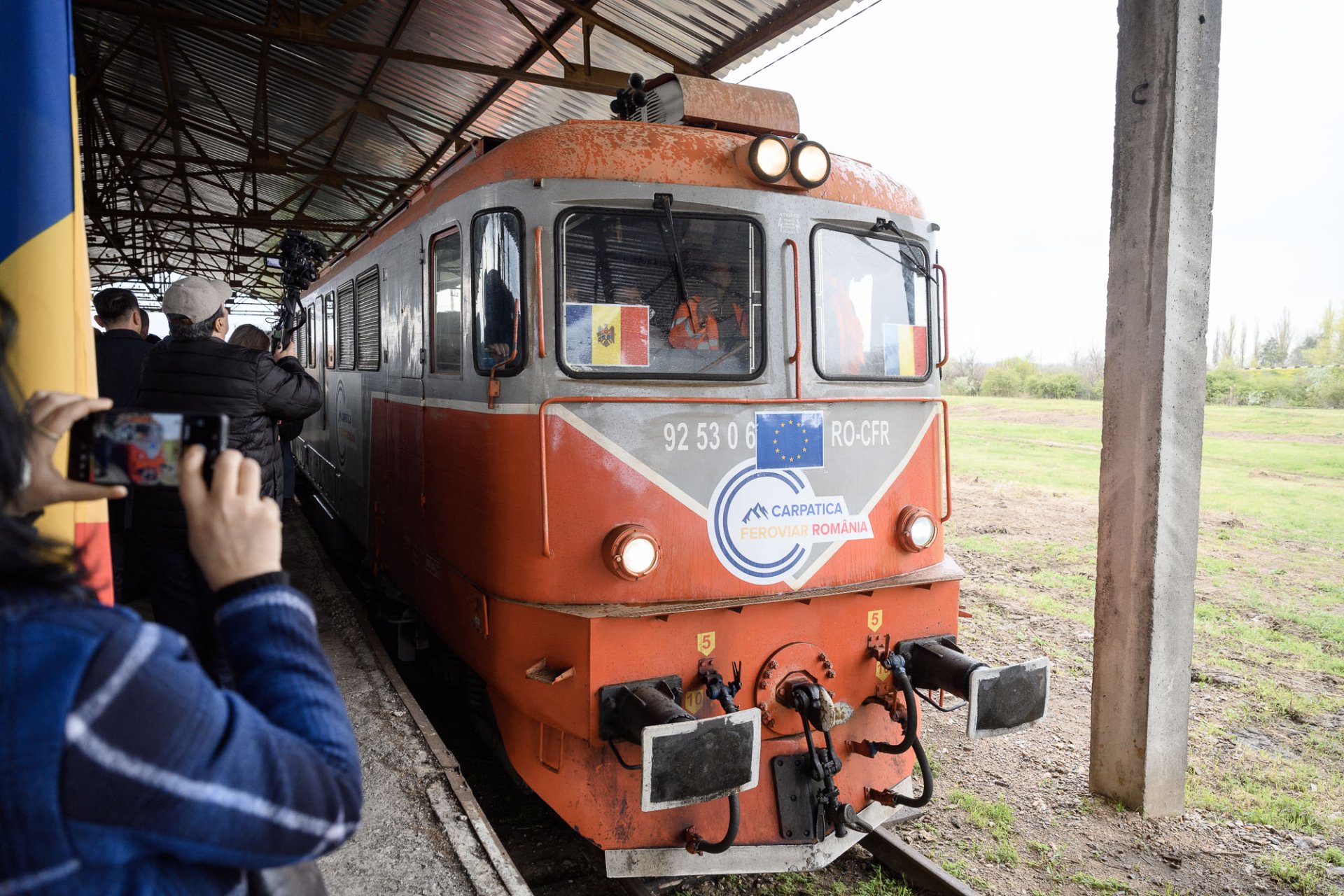
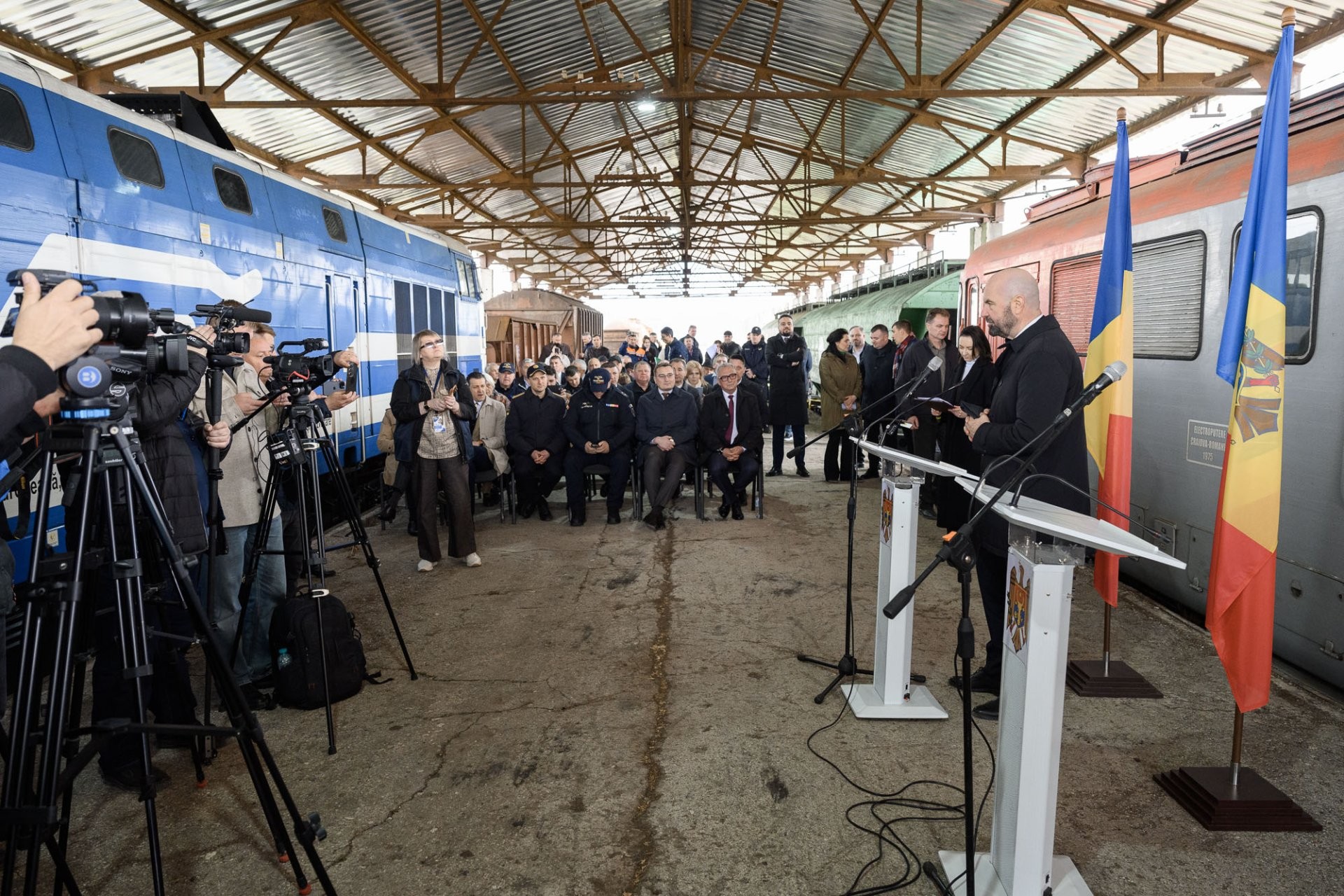
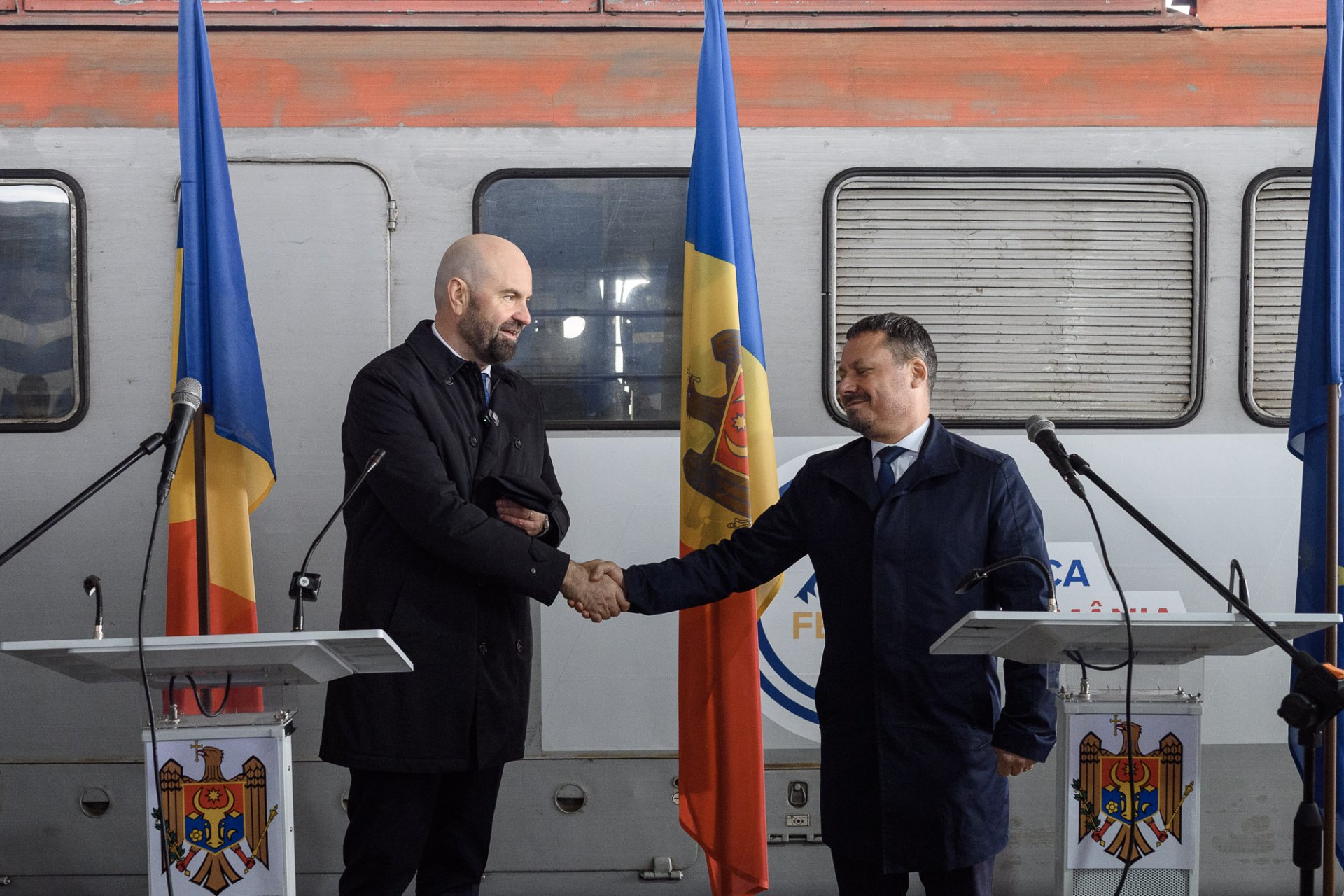
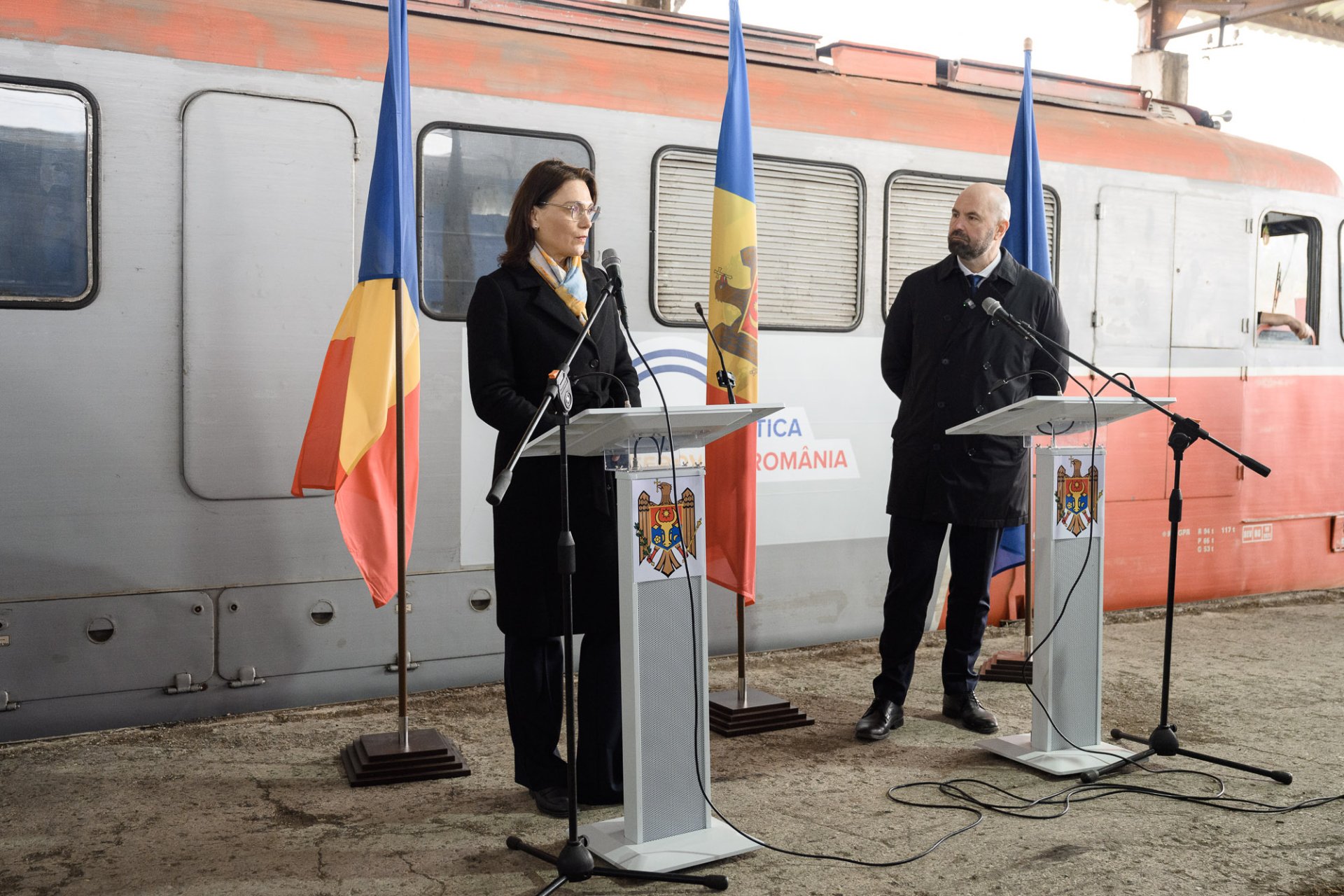
The Republic of Moldova is opening another railway border crossing point with Romania. Cantemir–Fălciu section, which lay derelict for decades, was tested on Wednesday, April 22, after rehabilitation and modernization. The project was carried out with Romania’s support. Deputy Prime Minister Vladimir Bolea highlighted the economic importance of this route, which links the Port of Constanța with the Republic of Moldova and ensures transit to Ukraine.
Cantemir–Fălciu railway section has a length of 4 kilometers on the territory of the Republic of Moldova and approximately 60 kilometers on the right bank of the Prut, in Romania. The last freight train ran on this segment in 1989, and in 2009 passenger train traffic was also halted. The rehabilitation works took more than a year and were carried out through the efforts of the Moldovan Railways employees and their counterparts in Romania.“This new station is the first opened at the border since the 1990s; it is a railway bridge with a very significant economic impact. I would like to see how optimistically the people of Cantemir and the district look toward their future. With the reopening, the social and economic life in this area will be completely reshaped over the coming years. I believe that for economic operators both in the Republic of Moldova and in Romania, we are placing on the map a new logistics route that links the Port of Constanța with the Republic of Moldova and provides transit to Ukraine. We are talking about logistics routes for Ukraine’s reconstruction process,” said Minister of Infrastructure and Regional Development, Deputy Prime Minister Vladimir Bolea.
Cantemir–Fălciu is the first border crossing point with coordinated, bidirectional control on the railway system. The Secretary of State within Romania’s Ministry of Transport, Irinel Ionel Scrioșteanu, who attended the official testing of the section, praised the efforts of the Moldovan authorities.“We are witnessing a historic moment because for far too long there was silence here, for far too long the sound of train wheels fell silent, for far too long the Cantemir–Fălciu bridge over the Prut was closed. Last year, when I visited the area together with the Deputy Prime Minister, there was barbed wire here, and for far too long 60 km of railway in Romania were unused. As of today, with this testing using both European and Soviet gauge, this is a European train, the locomotive and the two carriages. Europe has reached Cantemir today, crossing the Prut. This is the first border crossing point with coordinated, bidirectional control on the railway system. I would like to thank the authorities of the Republic of Moldova for their cooperation in opening this border crossing point and implementing the other projects,” Scrioșteanu said.
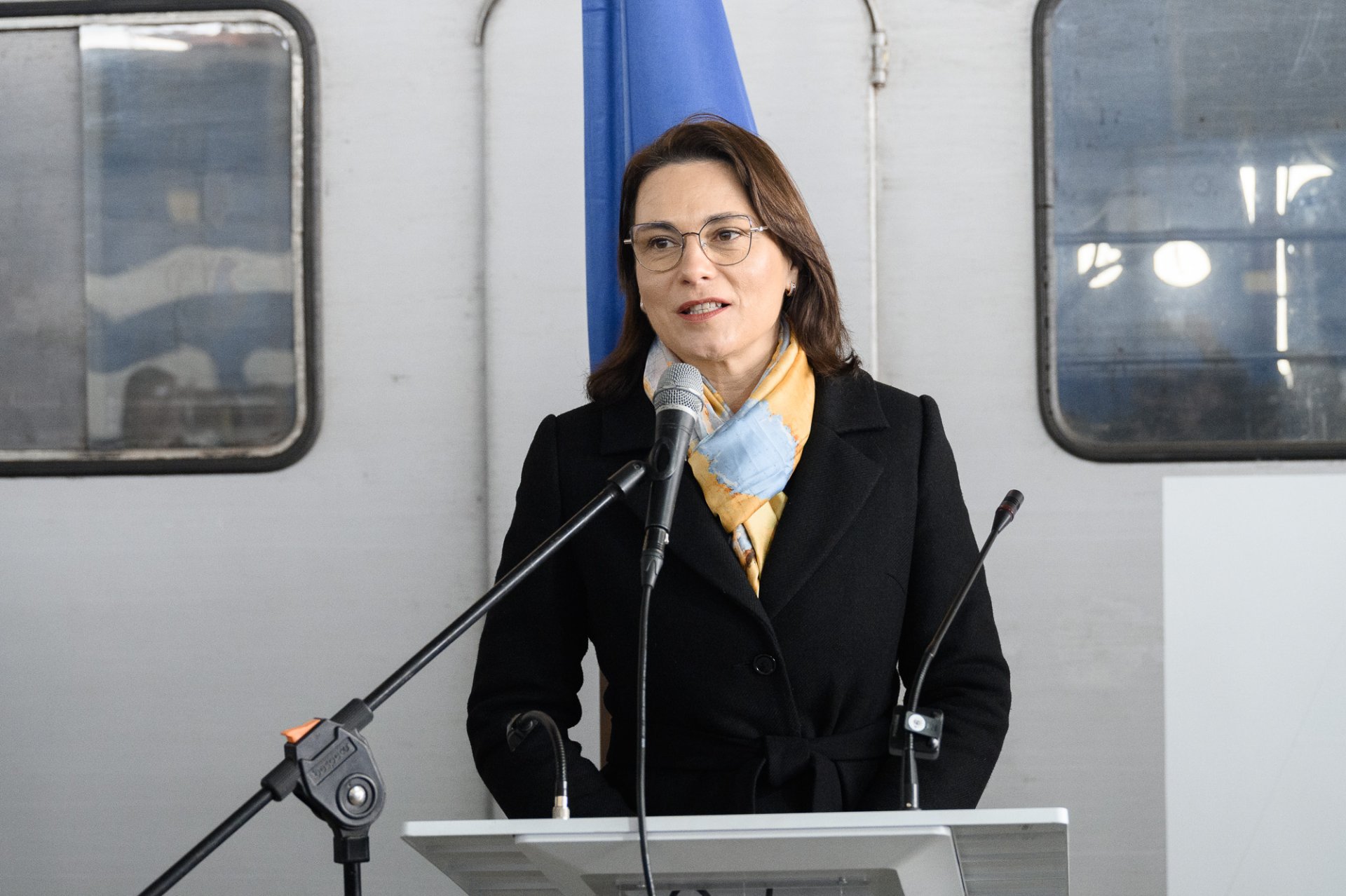
Minister of Internal Affairs Daniella Misail-Nichitin assured that the institution is ready to ensure modern and efficient border control. She stressed that coordinated control is the essence of a secure border and praised the strategic partnership between the Republic of Moldova and Romania.“Today we have a place that is making history; it is more than a technical facility, it is yet another gateway to the European Union, another signal of progress, proof that European belonging is built through infrastructure, institutions and concrete projects that support a high-performing market economy and a better climate for people, investment and trade. In our relationship with Romania, this project also has a special symbolic value. Romania is a strategic partner, a constant supporter and a natural link for the Republic of Moldova. Every connection point means closer ties between communities and economies and a stronger link to our European future. The Ministry of Internal Affairs contributes directly to this strategic building process. We have trained staff capable of providing modern and efficient control in line with European standards. We have professionals, we have the support of our strategic partners, and we have the will to build even more efficient public services. Coordinated control will be the essence of a secure, well-managed border aligned with European standards, where cooperation between the Republic of Moldova and Romania will bring more order and predictability for the movement of goods,” Nichitin said.
Officials from the Republic of Moldova and Romania gave assurances that connectivity projects with the European Union will continue. This year, the Ungheni–Ungheni bridge, with electrified European-gauge track, is to be put into operation.
The Prut 2–Fălciu railway line is part of a route built between 1917 and 1918 and was used for freight transport for several decades. After 1990, traffic gradually decreased, and the infrastructure fell into an advanced state of disrepair. The last freight train ran on this segment in 1989, and passenger transport was suspended in 2009.
The works carried out included the complete rehabilitation of about 4 kilometers of railway line, repairs to the bridge over the Prut and to the border stations Prut 2 and Fălciu. The line was adapted for mixed gauge, broad (1520 mm) and European (1435 mm), which allows direct connection to Romania’s railway network. Over 3,000 sleepers were installed and works were performed to consolidate the Prut riverbank.The resumption of traffic on Cantemir–Fălciu railway section will help diversify import/export routes and offers a direct option for freight transport with access to the European Union market. For the south of the country, the line can become active infrastructure with a positive impact on local economic development.
The project to reconstruct and modernize the Prut 2–Fălciu segment, as an interstate connection line intended mainly for freight transport, with the prospect of developing passenger traffic, was launched on the basis of the Memorandum signed on April 14, 2025, between CFM (Republic of Moldova) and CFR (Romania).
 Facebook
 Instagram
 X/Twitter
 Telegram
EU seeks solutions to support Moldova in energy crisis, to mobilize other donors
Two internal customs posts from Chisinau to operate on weekends
Eugen Doga Chisinau International Airport serves over 761,000 passengers in last September
PHOTOS // Austria’s experience in protected areas' management, habitats' restoration studied by specialists of Moldova
PM invites European companies to invest in Moldova
Moldovan companies promote fruit at Fruit Attraction 2026 in Madrid
Moldova has nearly 243 MWh of energy storage capacity
National Wine Day 2026, record edition in Moldova: 114 wineries, more than 116,000 tastings
Energocom purchased electricity at average price of EUR 157.42/MWh in September
One year since Moldova connected to SEPA
Over 100,000 tastings at National Wine Day in Moldova: which wines were most popular
Smart agriculture, priority for Moldova; agriculture minister says agriculture should be based on science
IMF's technical mission at Moldova's State Tax Service to reform, modernize tax administration
Moldovan Energy Ministry, U.S. Embassy in Chisinau launch working group for Straseni–Gutinas power line
Moldovan PM visits Chisinau Electrical Substation, in final preparation stage
Moldovan Foreign Affairs Ministry condemns repeated violation of national airspace
Moldovan PM, Ambassador of State of Qatar discuss investments, expanding bilateral economic cooperation
UPDATE // Unmanned aircraft crashes, explodes in field in northern district of Moldova
PHOTO // Third contingent of Moldova's National Army deployed to peacekeeping operation in Bosnia & Herzegovina
PHOTO // Students participating in Moldova Model United Nations project visit Foreign Affairs Ministry
VIDEO // Moldova explores opportunities to import liquefied natural gas from United States
 National Bank of Moldova
Moldovan PM visits Chisinau Electrical Substation, in final preparation stage
Moldovan PM, Ambassador of State of Qatar discuss investments, expanding bilateral economic cooperation
Moldovan parliament speaker in Rome has meetings with counterparts from Norway, Lithuania, Armenia
Moldovan parliament's secretary general participates in meeting of secretaries general of parliaments of Council of Europe member states
Speaker held talks with counterparts from Italy, France and Türkiye


PHOTO // Students participating in Moldova Model United Nations project visit Foreign Affairs Ministry
VIDEO // Moldova explores opportunities to import liquefied natural gas from United States
Moldovan government denies “manipulations” regarding plans to establish drone factory in Chisinau
PHOTO // Railway of Moldova enterprise tests new Chisinau–Revaca–Sangera railway route
Moldovan parliament speaker in Rome has meetings with counterparts from Norway, Lithuania, Armenia
Moldova, Armenia to strengthen parliamentary cooperation
Air Operations Center of National Army: number of airspace violations reaches 100 in Moldova
VIDEO // Shepherds' family of Moldova sets national record with 30.7-kilogram cheese
Moldovan parliament's secretary general participates in meeting of secretaries general of parliaments of Council of Europe member states
PHOTO GALLERY // 30.7-kilogram cheese set national record at Moldexpo
PHOTO // Moldovan Radu Budan finishes second in 5,000-kilometer ultramarathon in New York
Moldovan, Lithuanian Speakers discuss support for country's European integration
Government launches in-depth assessment of Yandex Go’s activities in Moldova
Speaker welcomed Norway’s decision to turn mission in Chișinău into full-fledged embassy
DOC // Official Journal publishes decision on modernization of 25 technical vocational education institutions
Gagauzia enters electoral campaign for 15 November elections
Receive the latest news directly to your email

Receive the latest news directly to your email