

Republic of Moldova launches first-ever campaign to prepare population for crisis situations
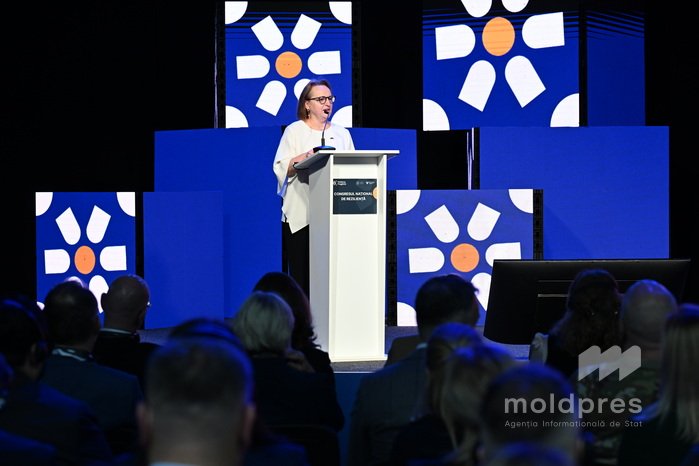
The Republic of Moldova has launched, for the first time, a national campaign to prepare the population for crisis situations, as part of Prepared Moldova program. The launch took place today in Chișinău during the first edition of the National Resilience Congress. Prime Minister Vasile Tofan, who attended the event said that in recent years the Republic of Moldova has faced multiple crises, and under these circumstances state institutions, communities and citizens must be prepared to respond quickly and know the first steps to take, so that every person feels safe and protected.
The official noted that the launch of the campaign is more timely than ever, given that at the beginning of this week seven drones illegally flew through the airspace of our country and even over the capital, while a powerful earthquake was felt across the country during the night.
“Such examples tell us that we must be prepared. We cannot rely only on improvisation. We must be prepared. No matter how complicated the situation may be, we must not be driven by fear when facing challenges. Fear is not a good adviser. And there is a great deal of fear in society today. Fear can cloud our judgment and push us to spread rumors or make hasty decisions. We need calm, especially in such situations; we need to follow the authorities’ information, verify it and know what we have to do. That is precisely what today’s event and the campaign being launched today are about. Talking about risks means preparing ourselves,” the prime minister said.
He added that state institutions, communities and citizens must be informed about the steps to be taken in crisis situations. “Prepared Moldova must become a daily practice,” Vasile Tofan said.
“The past few years have put us to a difficult test. We have gone through a pandemic, energy crises, cyberattacks, disinformation campaigns and pressures generated by the brutal war at our border. The world is changing rapidly, and risks can take different forms. In these challenging circumstances, the people of the Republic of Moldova have shown solidarity and strength. Now we must turn this solidarity into a habit of preparedness. State institutions must prevent risks, communicate clearly and be ready to intervene. Local authorities must know their communities and the needs of their people. Companies, schools, civic organizations and the media also have an important role to play. No community should be left to manage on its own. No family should be left to manage on its own. The state has a duty to provide accessible information, coordinate institutions and support people who need additional assistance. In this regard, today’s event must, above all, send a clear signal. We need exercises, cooperation between institutions and communities, tested plans and information that reaches people. Prepared Moldova must become a daily practice,” the prime minister stated.
He denied rumors that the authorities were planning to cut off electricity or water supplies.
“Rumors and false reports have circulated in recent days claiming that the authorities would turn off the electricity and water. This is a very popular rumor in Moldova today. I want to state clearly on this occasion that we are not preparing to shut down these services. We are preparing people to know what to do if, for any reason, an essential service is interrupted. That is why we are launching the Prepared Moldova campaign and the resilience guide for families, communities and citizens today,” the prime minister said.
Vasile Tofan stressed that preparedness for crisis situations is a common practice in other countries.
“Too often in our history we have postponed preparedness, saying that the time was not right. The truth, however, is that the time will never be perfect. There will always be reasons not to do it now. Preparing for such crisis situations is a good practice, already rooted in the experience of countries such as France, Japan, Norway and Sweden, as well as dozens of other countries. They all have such guides and campaigns because they are responsible states. We too must learn to be a responsible state,” he said.
The Resilience Guide for Families, Communities and Citizens was launched during the event. The prime minister urged citizens to study the guide in order to be informed and prepared for crisis situations. He noted that the first 72 hours after the onset of a crisis are crucial, and that a family plan and accurate information from official sources can help people cope better with the beginning of a crisis.
“We must listen, read and inform ourselves so that, when a crisis occurs and we need to make decisions very quickly, we are prepared and do not leave room for experiments and improvisation. The guide helps us answer concrete questions. What do we do if the electricity or water supply is interrupted? Where do we meet if we cannot communicate? Who picks up the children? How do we make sure that an elderly neighbor or a person who needs support is not left alone? The first 72 hours are not a period in which we can afford to make mistakes. They are the most important hours, when we need clear preparedness guidelines. A family plan and information about official sources can help us get through the beginning of a crisis more effectively. When households are prepared, emergency teams can focus on those facing the greatest danger,” Vasile Tofan explained.
European Union Ambassador to the Republic of Moldova Iwona Piórko reaffirmed the EU’s support for the Republic of Moldova.
“Neutrality does not mean leaving the country undefended; it is not a shield. A drone does not read a country’s Constitution. The European Union respects the neutrality of the Republic of Moldova, and that is why we are helping you protect yourselves. A country without defenses is not neutral; it is exposed. A neutral country has both the right and the responsibility to protect its citizens. That is why the European Union and its member states have already provided more than 370 million euros through the European Peace Facility,” the ambassador said.
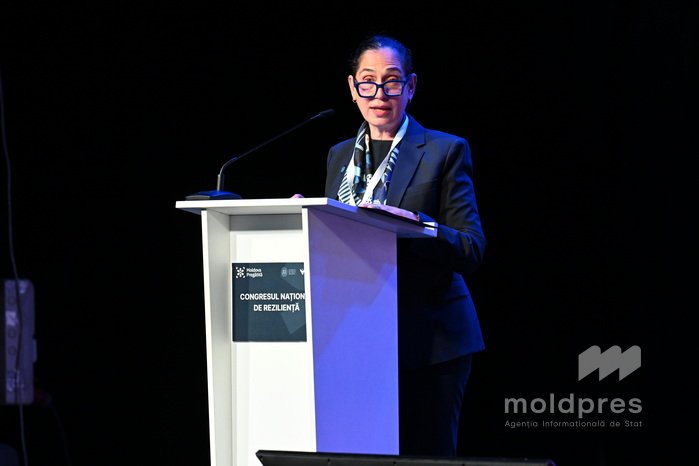
According to the ambassador, resilience means institutions and citizens knowing what to do when a crisis strikes, while an informed and prepared community is the best response to such incidents.“We cannot choose the crises that come our way, but we can choose how prepared we are for them. Many of the risks facing the Republic of Moldova originate outside the country: drones violating its airspace and cyberattacks intended to make society more divided and unsettled. (...) A country’s strength is not measured by the existence of threats, but by its ability to withstand them. This strength begins with prepared citizens, capable institutions and a society that stands together and is united. This is the future Moldova is preparing for, and the European Union is helping you achieve it,” the European Union ambassador concluded.
United Nations Resident Coordinator in Moldova Yesim Oruc highlighted the importance of preparing communities and state institutions for crisis situations.
“Risks do not come one at a time, and their impact does not remain limited to certain sectors or countries. Risks have different origins, but they carry the same lessons. We cannot predict the next crisis, but we can prepare. Preparedness works when public institutions, schools, businesses, communities and citizens come together to identify risks and prepare for them,” Yesim Oruc said.
The national campaign to prepare the population for the first 72 hours of a crisis situation will continue at the regional level on November 20 in the south of the country, in Ștefan Vodă, and on November 21 in the north, in Edineț. This is the first campaign of its kind organized nationally, extending crisis preparedness from state institutions to every family and community. The goal is simple: people should know how to prepare, where to find reliable information and what to do to protect themselves and those close to them in unforeseen situations, while state institutions provide assistance.According to the National Crisis Management Center, the campaign does not signal an impending crisis and does not involve planned interruptions of public services. The 72 hours represent an internationally recognized reference period for community preparedness, so that people can cope more easily with temporary difficulties while authorities intervene, assist those in danger and work to restore affected services. Citizen preparedness complements the authorities’ response; it does not replace it.
 Facebook
 Instagram
 X/Twitter
 Telegram
Republic of Moldova Shaken by Another Earthquake
Lyceum from north-eastern Moldova city renovated with U.S. support
PHOTO // National minorities involved in discussions about Moldova’s European future
International Students' Day: over 63,000 young people celebrate event in Moldova
PHOTO // Moldova’s public health system receives equipment worth over 500,000 dollars for emergency response, infections' detection
Breaking news
President of Moldova’s National Confederation of Trade Unions detained in corruption case; allegedly received 2,000 dollars
PHOTO // Eight border crossing points of Moldova endowed with modern equipment for verification of documents, biometric data
Moldova's passport ranks 74th worldwide, with access to 107 destinations
Republic of Moldova participated in dismantling three international malware networks
All public digital services restored on EVO portal
Ukrainian refugee children supported in learning Romanian and integrating into schools in Moldova
Foreigners in Moldova to be able to access information about residence, employment and public services on digital platform
Moldovan Civil Aviation Authority explains presence of aircrafts in Chisinau's airspace: “There are three SR-20 aircrafts that flew from Czech Republic”
False fire alarm at Chisinau Airport; operations proceed as normal at airport
Moldovan PM visits company specializing in pastry production
Moldovan parliament speaker supports cooperation with Romania, Ukraine on drones' interception: “We must be prepared for any scenario”
Moldovan parliament speaker comments on possible expulsion of Russian ambassador
Yellow, orange wind warnings issued in Moldova; gusts to reach up to 23 m/s
Moldovan PM, president of Clarke Energy company discuss new investment opportunities in energy sector
Registration for Wine of Moldova 2026 National Competition open; wineries can register till November 25
Why aren’t drones violating Moldova’s airspace shot down? Explanations by Defence Ministry's representative
 National Bank of Moldova

Moldovan PM visits company specializing in pastry production
Moldovan deputy PM for reintegration attends 35th anniversary of founding of Lucian Blaga Theoretical Lyceum from Tiraspol
Moldovan PM, president of Clarke Energy company discuss new investment opportunities in energy sector
New measures to protect aquatic biodiversity: mandatory permit for introducing exotic fish species into fish farms
European support in disasters: draft law on Moldova’s participation in EU Civil Protection Mechanism passed in first reading

Why aren’t drones violating Moldova’s airspace shot down? Explanations by Defence Ministry's representative
ARMENPRESS: Armenia invited to participate in G20 summit in Miami
Speaker supports collaboration with Romania to protect Moldova’s airspace, proposed by Renato Usatîi
New measures to protect aquatic biodiversity: mandatory permit for introducing exotic fish species into fish farms
European support in disasters: draft law on Moldova’s participation in EU Civil Protection Mechanism passed in first reading
Government Secretary-General: Community resilience can be strengthened by supporting vulnerable people and frontline workers
VIDEO // Chisinau Airport to be expanded under contract worth over 180 million lei; reconstruction works to start in next December
PHOTO // Authorities recommend preparing emergency backpack for first 72 hours of crisis
Passed by Parliament: Bălți mayor to be assisted by own cabinet
Parliament denounced two CIS Agreements that had not been implemented
Speaker about Moldova Prepared campaign: Every citizen must know how to prepare for crisis situation and how to protect family
Prime Minister attends launch of Prepared Moldova campaign
Legislation on producer organizations in agri-food sector aligned with EU standards
EVO App to add Alerts and Notifications Module: emergency information to reach around 200,000 users
Legislative measures to streamline cooperation mechanism with EU member states in recovery of claims process adopted by Parliament
DOC // Moldova Prepared: Resilience Guide with 477 recommendations for 48 crisis situations launched in Moldova
Receive the latest news directly to your email

Receive the latest news directly to your email