

PHOTO // EU supports green transition of the Republic of Moldova
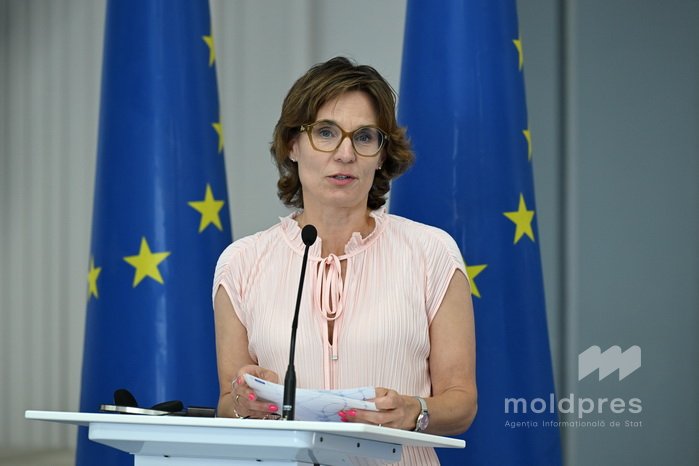
Green Moldova means a more prosperous, more resilient country that is better prepared for accession to the European Union, said European Commissioner for Environment, Water Resilience and Competitive Circular Economy Jessika Roswall. The official noted in Chișinău that the European Union is ready to support the Republic of Moldova in implementing environmental projects and the green transition through the Growth Plan, which provides for the allocation of 1.9 billion euros for the country’s development.
“We believe that the green transition and all environmental actions that support these objectives are the compass guiding the Republic of Moldova on its journey towards the European Union, and that they are not only about ticking off certain commitments, but also about truly bringing benefits. We are genuinely pleased that the Republic of Moldova is meeting these standards. Of course, challenges remain,” said Jessika Roswall.
The European Commissioner underlined the importance of strengthening the administrative capacities of the Republic of Moldova for applying the EU environmental legislation and managing the challenges related to climate change.“Administrative capacities are absolutely crucial if we want to implement all European legislation, and this is essential if we want to improve and address all the risks of climate change, improve infrastructure, wastewater treatment and others. We are ready to support the Republic of Moldova through the Growth Plan, which facilitates the allocation of 1.9 billion euros for the Republic of Moldova, in order to facilitate and speed up green projects for the Republic of Moldova,” added the European Commissioner for Environment.
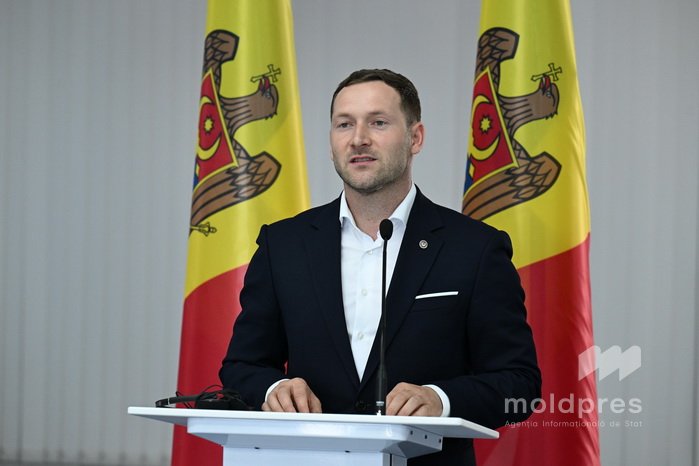
Minister of Environment Gheorghe Hajder stressed that the green transition is more than just an environmental objective, being a process that concerns economic development, investments and the European future of the Republic of Moldova.“The green transition is no longer just an environmental objective. It is about development, the economy, competitive investments and our European future. We have reaffirmed our goal to accelerate the transposition of European environmental legislation. However, changes will be made gradually so as not to put private companies and citizens in difficulty. For us, this process is not just about ticking off technical rules; it is essential that the new standards are explained in a way that everyone can understand. Our goal is clear: to have safer water, cleaner air and quality public services. We also discussed the reform of the Ministry of Environment and the strengthening of the capacities of the subordinate institutions. It is important that European legislation does not remain only on paper, but is applied correctly and efficiently to protect the environment,” said Hajder.
Among the priorities are the strengthening of environmental institutions, the digitalisation of registers of protected natural areas and obtaining additional technical support for Chapter 27 – Environment and Climate Change.“We also discussed the need for additional support for digitalisation, especially for developing the registers of protected natural areas, and the need for greater technical support for Chapter 27. We need rapid, practical and direct expertise to maintain the pace of the reforms we have committed to. We greatly appreciate the support already provided by the EU through important projects in the field of air quality, climate resilience, green transition and institutional strengthening. Last but not least, I said that we are ready for the opening of Cluster 4 – Environment and Climate Change,” the minister added.
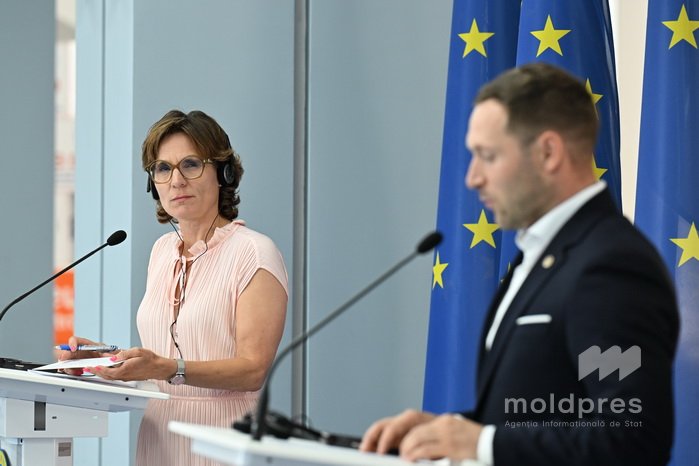
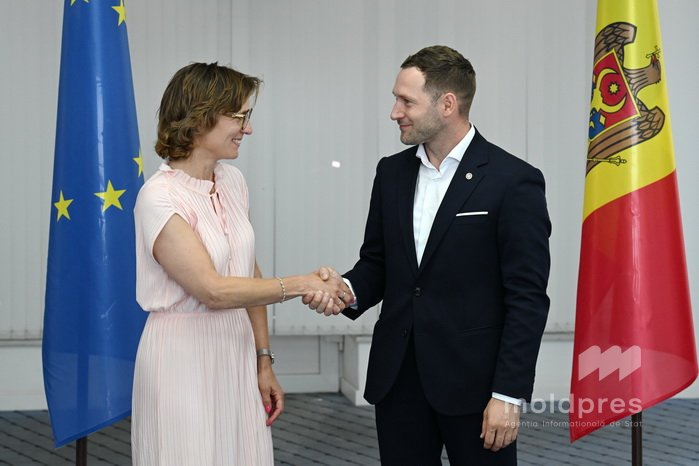
The European Commissioner for Environment, Water Resilience and Competitive Circular Economy, Jessika Roswall, met today in Chișinău with the President of the Republic of Moldova, Maia Sandu.The officials discussed the European path of the Republic of Moldova, the progress in aligning with the EU environmental acquis, as well as the investments needed for managing climate change, access to water, renewable energy, afforestation and waste management.
 Facebook
 Instagram
 X/Twitter
 Telegram
Moldova to host international conference on European convergence
New Moldovan government’s economic priorities on agenda of talks with European Commission’s Director-General for Neighbourhood and Enlargement Negotiations
PHOTO // Bypass road of central Moldova city close to completion; route to be opened in next autumn
Rich apricot harvest in Moldova: up to 17,000 tons of high-quality fruits for export
Moldovan Energy Ministry proposes gas market solutions amid rising prices: quarterly tariff adjustments, lower distribution costs
Moldova, Bulgaria strengthen cooperation: meeting between representatives of two countries' Chambers of Commerce and Industry
VIDEO // Vulcanesti–Chisinau Overhead Power Line of 400 kV fully energized
VIDEO // Moldova's industry accelerates: 7.2 percent growth in first five months of 2026
Large infrastructure projects, capital investments to be accelerated in Moldova
VIDEO // Moldovan PM requests development of package of measures to reduce excessive inspections of entrepreneurs
Concept of new fiscal policy to be presented in Moldova by August 6
New Moldovan finance minister says balance must be found between budget needs and economic development
New agriculture minister of Moldova presents mandate's priorities
Moldova's designated PM proposes new vision for harnessing state-owned assets
PM, Ambassador of Romania discuss Moldovan-Romanian partnership, European path of Moldova
Moldovan Economic Development and Digitalization Ministry prepares two new deregulation packages: 100 laws, government decisions to be amended
Moldovan parliament denounces agreement with Commonwealth of Independent States on cooperation in field of books, printing
Eurasia organization included in Registry of Extremist Organizations of Moldova
 National Bank of Moldova
PM has meeting with Ambassador of Ukraine to Moldova
PM meets European Union Ambassador to Moldova
Moldovan PM to pay official visit to Bucharest
PM, Ambassador of Romania discuss Moldovan-Romanian partnership, European path of Moldova
Moldovan PM says government to intervene before problems turn into bigger crises


Roads of Moldova to be mandatorily assessed every five years
Moldovan PM says absolute priority drinking water for people
Moldovan PM government cannot influence 60 per cent of gas tariff, there is room for optimization for remaining 40 per cent
Red Code of reduced water flow on many rivers of Moldova
Moldovan PM announces new measures to supply market with diesel, protect consumers from price increases
Protest held outside Moldovan parliament building against higher gas tariffs; parliament speaker demands solutions from opposition
LIVE // Moldovan PM holds news conference
Court rulings to be recognized more easily abroad; Moldova joins Hague Convention
Peculiarities of elections to People’s Assembly of Gagauzia to be included in Electoral Code
Parliament speaker says Moldova does not risk running out of fuel
Over 10,000 applicants submit admission files to universities of Moldova on first day of contest
Moldovan PM, fuel market participants discuss measures to secure domestic market
What state of alert in energy, hydrological sectors involves: Moldova's government prioritizes actions to protect population, ensure uninterrupted operation of vital services
Citizens to be able to come up with proposals for authorities’ agenda via e-Democracy platform
PM says Moldova has lowest fuel prices in region, country must make sure it has necessary volumes
Baccalaureate pass rate increases after additional session in Moldova: over 15,000 candidates pass exams
Receive the latest news directly to your email

Receive the latest news directly to your email